


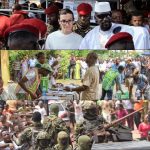


A regional forum convened by the Inter-Governmental Action Group against Money Laundering in West Africa (GIABA) and the ECOWAS Gender Development Centre (EGDC) has underscored the escalating threat of human trafficking across the Economic Community of West African States (ECOWAS).
Held in Lagos, Nigeria, from 17 to 19 December, the three-day event brought together law enforcement agencies, financial intelligence units and other stakeholders to develop gender-responsive strategies against transnational organised crime.
The forum’s opening featured a call from GIABA’s director-general, Mr. Edwin W. Harris Jr, for victim-centred regional coordination, describing the fight against trafficking as a “moral imperative” rather than mere compliance.
He highlighted West Africa’s predominantly cash-based informal economy as a major enabler, complicating efforts to trace illicit funds linked to exploitation. This fits in with broader regional challenges, where poverty, unemployment and migration vulnerabilities fuel a trade estimated to generate $450bn globally annually, with West Africa playing a major part.
Recent data from the International Organisation for Migration (IOM) provides stark context. An October analysis of trafficking in ECOWAS states reveals evolving routes that exploit migration flows, identifying over 1,000 victims annually across the region.
This builds on ECOWAS and IOM’s joint efforts, which in August disbursed $516,000 to support more than 1,000 victims, focusing on reintegration and protection.
The United Nations Office on Drugs and Crime (UNODC) reports that 58% of identified trafficking victims in 2022 were exploited domestically, a trend which regional rights groups say likely persists in West Africa where forced labour accounts for a substantial portion of cases.
UNODC data indicates around 4,712 victims of forced labour detected in the sub-region, though under-reporting remains a key issue. Nigeria, as host, reaffirmed its commitment to dismantling trafficking networks, with officials emphasising integrated financial intelligence and security measures.
The event’s gender lens is particularly pertinent: women and girls comprise the majority of victims in West Africa, often subjected to sexual exploitation or domestic servitude amid economic disparities.
Stakeholders discussed sustainable reintegration, urging political will to address root causes like informal economies and weak border controls. The forum occurs against a backdrop of regional instability, including coups and cyber threats, which exacerbate trafficking risks.
ECOWAS leaders, at their recent summit, pledged collective action on such crimes, but experts warn that without enhanced data-sharing and funding, progress may stall.
The gathering’s outcomes could strengthen ECOWAS protocols, potentially reducing victim numbers through better coordination. However, as the 2025 World Day Against Trafficking in Persons theme, “Human Trafficking is Organised Crime – End the Exploitation,” reminds, sustained international support is essential. With global detections down 11% per UNODC, West Africa’s response remains critical to reversing local trends.