The United States conducted airstrikes against Islamic State (IS) militants in northwest Nigeria on 25 December, in coordination with Nigerian authorities. The operation targeted camps in the north-western state of Sokoto, according to US Africa Command (Africom). Initial assessments reported multiple militants killed, with no civilian casualties.
Nigeria’s Ministry of Foreign Affairs confirmed the strikes on 26 December, describing them as part of established bilateral security cooperation. The ministry emphasised “precision hits on terrorist targets” and rejected any portrayal of the action as aimed solely at protecting one religious group, noting that terrorism impacts “Christians, Muslims, or other communities” indiscriminately while affirming respect for sovereignty.
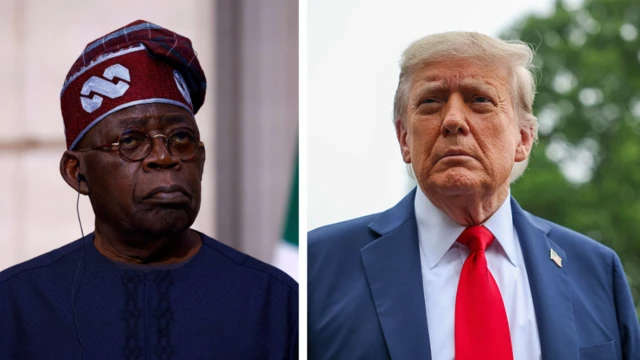
U.S. president, Donald Trump, announced the strikes on Truth Social, stating; “Tonight, at my direction as Commander in Chief, the United States launched a powerful and deadly strike against ISIS Terrorist Scum in Northwest Nigeria, who have been targeting and viciously killing, primarily, innocent Christians, at levels not seen for many years, and even Centuries!” He warned of further action if “their slaughter of Christians continues.”
The strikes involved precision munitions launched from a US Navy vessel in the Gulf of Guinea, disrupting IS networks in the Sahel region. Africom described the operation as building on shared intelligence with Nigerian forces against the Islamic State West Africa Province (ISWAP).
No additional strikes or militant responses have been reported. Nigerian officials, including a presidential adviser, reiterated approval and welcomed US assistance respecting territorial integrity. International reports from major global media platforms confirmed the Christmas Day timing and bilateral nature.
Trump’s framing ties the strikes directly to protecting Christians, which suggest that they are in response to warnings issued between October and November about an “existential threat” to Christianity in Nigeria and threats of military intervention to halt the “slaughter” of Christians.
However, those initial claims centred primarily on sectarian violence in Nigeria’s Middle Belt region, involving clashes between predominantly Muslim Fulani herdsmen and predominantly Christian farming communities.
These conflicts are largely driven by disputes over land, grazing routes, water resources and ethnic tensions, exacerbated by climate change and population growth, rather than jihadist ideology.
In contrast, ISWAP, the target of the 25 December strikes, operates mainly in the northeast and northwest, pursuing insurgent goals against the state. While the group has targeted churches and Christians in some attacks, independent data shows its violence affects Muslims disproportionately, given its presence in Muslim-majority areas.
The Nigerian government also takes some credit for its role in persuading U.S. authorities to redirect their focus from the sectarian conflicts in the country’s north-central region, often termed the Middle Belt, towards the jihadist movements that have mobilised significant forces against several states in the area, including the Sahel.
Analyses from several groups monitoring violence in the region, like the Armed Conflict Location & Event Data Project indicate that, overall, jihadist militants including IS affiliates have killed far more Muslims than Christians since the insurgency began.
Fulani herdsmen-related violence, often highlighted in advocacy for Christian persecution, has caused significant civilian deaths in recent years, frequently more than ISWAP, but is not directly linked to the northwest IS camps struck on 25 December.
By linking the anti-ISWAP operation to his prior warnings about sectarian herdsmen-farmer clashes, Trump appears to deceptively switch the narrative, conflating separate threats to portray the strikes as fulfilling promises to combat anti-Christian “genocide.”
Nigerian officials and experts maintain the insecurity is multifaceted, not a targeted religious extermination, and warn that sectarian framing risks deepening divisions.
The operation reflects increased US counterterrorism engagement in the Sahel but underscores challenges in addressing root causes like governance gaps and resource conflicts through impartial approaches.