



Bamako, Mali
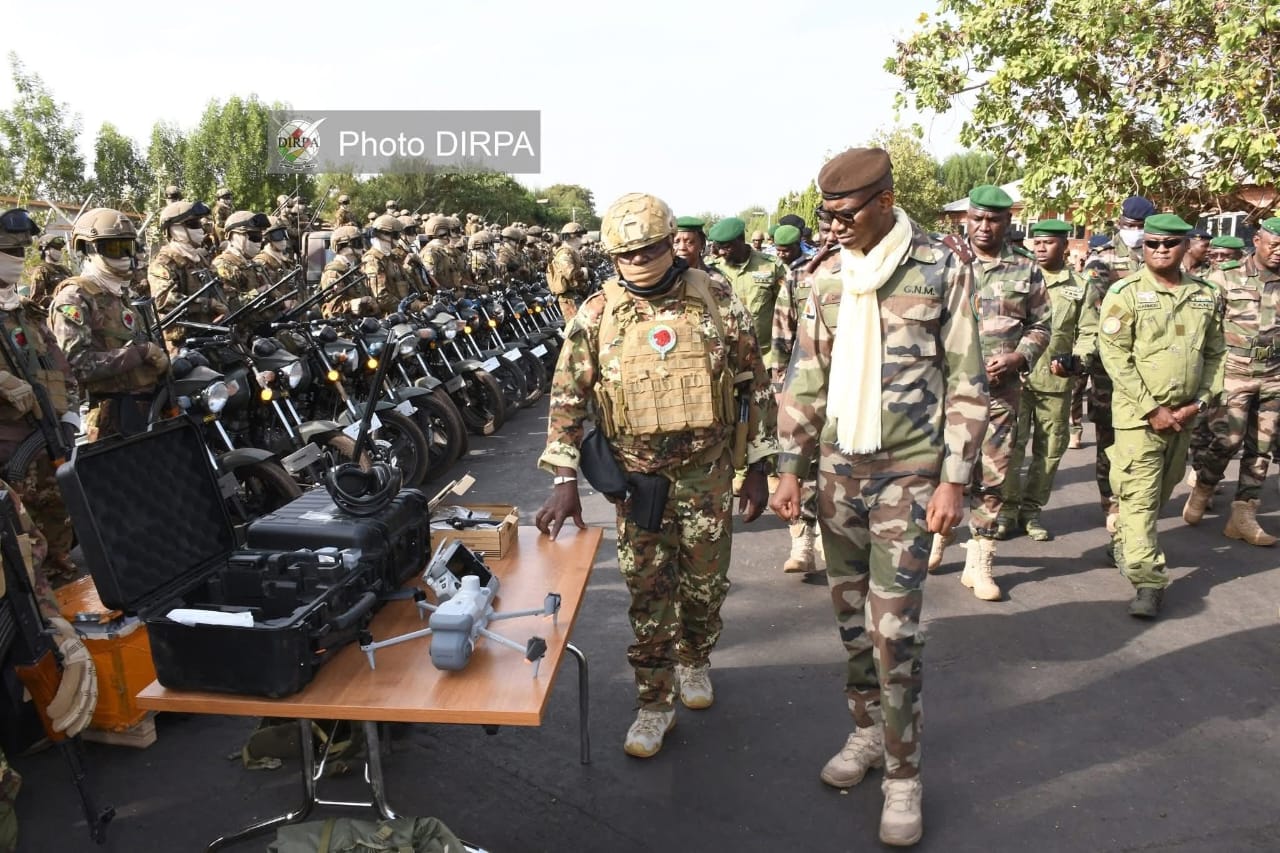
Mali’s armed forces have established a new rapid intervention battalion equipped with motorcycles to enhance mobility and combat terrorist groups in rugged terrains, according to the country’s defence ministry.
The unit, known as the Bataillon d’Intervention Rapide (BIR), was launched on 19 December against the backdrop of escalating attacks on supply routes in the country. The ceremony in the capital, Bamako, marked a strategic shift for the Malian Armed Forces (FAMa), aiming to improve responsiveness to threats from jihadist insurgents.
Defence minister, Sadio Camara, who presided over the event, described the move as a “continuous adaptation” to an evolving security landscape, while army chief, Oumar Diarra, highlighted recent ambushes on fuel convoys and civilian vehicles as a key impetus.
The battalion’s motorcycles enable operations in areas inaccessible to heavier vehicles, allowing “surgical precision” strikes, as noted in state media reports.
The initiative draws inspiration from similar tactics in neighbouring Burkina Faso, where Ibrahim Traoré established a Special Rapid Intervention Brigade in early 2024 to counter terrorism.
Analysts see this as reflecting growing military collaboration within the Alliance of Sahel States (AES), comprising Mali, Burkina Faso and Niger, formed to address regional instability independently of Western influence.
The launch coincides with a separate ceremony on 20 December, where Goïta presented an emblem to the AES’s unified force, underscoring joint efforts against shared threats.
Mali has grappled with a security crisis since 2012, when Tuareg rebels and jihadist groups seized northern territories, leading to French intervention in 2013.
In spite of a 2015 peace accord, violence has spread southward, with groups like the al-Qaeda-affiliated Jama’at Nasr al-Islam wal Muslimin (JNIM) conducting ambushes. Recent months have seen intensified attacks on fuel supplies from Senegal and Côte d’Ivoire, exacerbating a nationwide shortage that rationed petrol in Bamako last month.
Human rights groups have raised concerns over Mali’s military approach. A Human Rights Watch report this year documented abuses by security forces, including summary executions, at the same time as the junta’s extends its transitional rule until at least 2027.
Security experts warn that while the BIR may provide tactical advantages, sustainable peace requires addressing root causes like poverty and ethnic tensions. Thousands have died and over 370,000 displaced in Mali’s conflict, according to UN figures. Neighbouring countries face similar challenges, with Burkina Faso reporting over 8,000 deaths from jihadist violence since 2015.
The Malian government has not disclosed the battalion’s size or deployment plans, but officials emphasise its role in protecting civilians and restoring stability. The development signals a renewed focus on agile, indigenous responses to a protracted crisis.