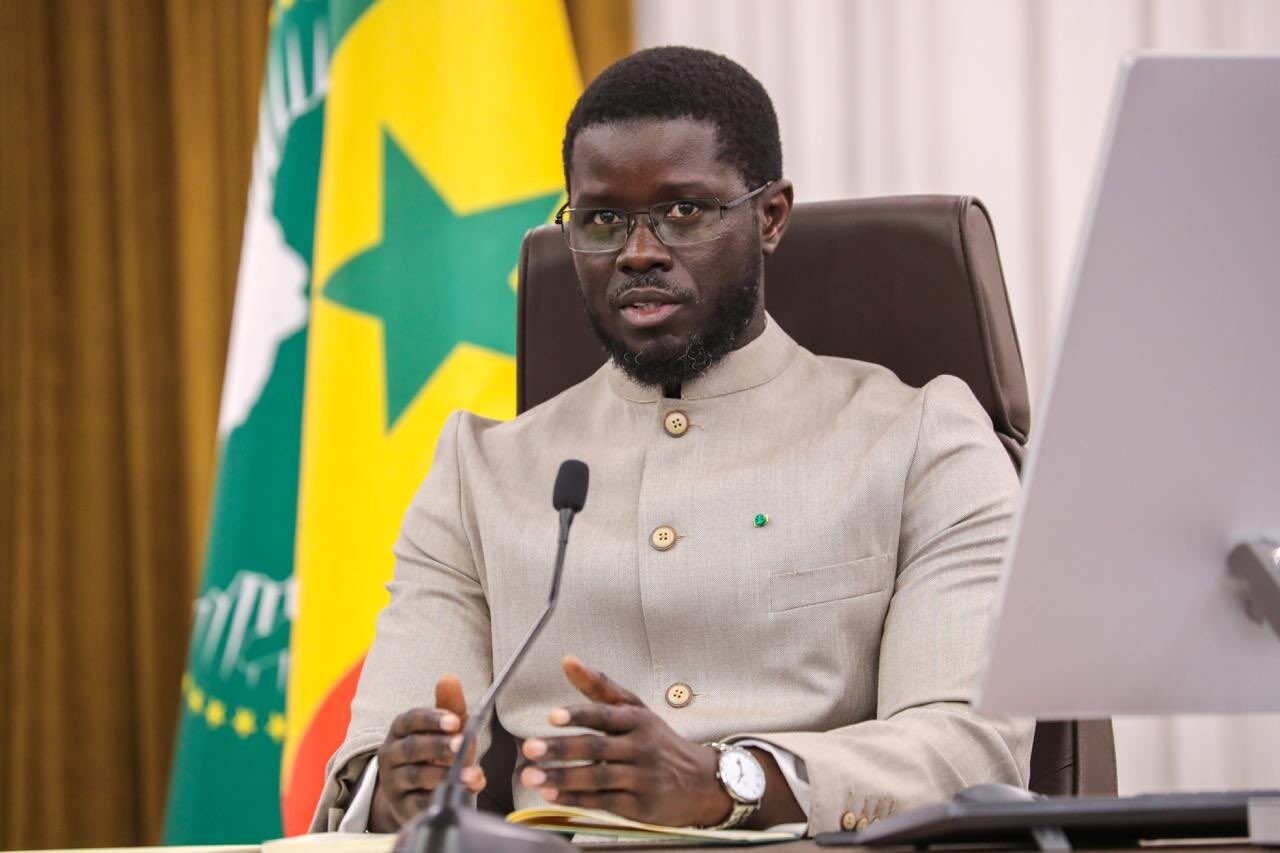
Senegal’s president, Bassirou Diomaye Faye, has unveiled plans for substantial public investments in 2026, targeting education, healthcare and water infrastructure, as the country seeks to consolidate its post-pandemic recovery and address long-standing social needs.
In his New Year’s Eve address on 31 December 2025, Faye described 2026 as a year of “renewed public investment”, following a period of fiscal restraint in 2025.
The announcements come against a backdrop of robust economic growth, projected at 7.9% for 2025 by the International Monetary Fund, driven by the ramp-up of oil and gas production from fields like Sangomar and Grand Tortue Ahmeyim.
Non-hydrocarbon sectors, including agriculture, have also rebounded, contributing to household savings of 342.5 billion CFA francs (£426m) through reduced prices on essentials last year. Education emerges as a key priority, with 62.8 billion CFA francs allocated for new infrastructure. This includes building 2,500 classrooms, 300 administrative blocks and 480 sanitation facilities nationwide.
An additional 29 billion CFA francs will accelerate the eradication of temporary school shelters, a persistent issue in rural areas where overcrowding hampers learning outcomes. Higher education and vocational training receive 31 billion CFA francs, aiming to equip young Senegalese, who make up over 60% of the population under 25, with skills for a diversifying economy.
Healthcare funding rises to 91 billion CFA francs, earmarked for 35 high-standard community health centres and upgrades to medical facilities. A flagship element is the completion of the Diamniadio Oncology Hospital, a 108-bed facility designed to reduce reliance on overseas treatment for cancer patients.
This builds on Senegal’s Rays of Hope initiative with the International Atomic Energy Agency, which has advanced national cancer control plans since 2022. The investments address gaps in rural healthcare, where access remains uneven despite progress in urban centres like Dakar.
Water security, declared a “strategic priority”, features the launch of the Grand Water Transfer Project. Sourcing from Lake Guiers in the north, it aims to supply 1.8 million cubic metres of water daily to the Dakar-Mbour-Thiès corridor and the religious city of Touba, supporting rapid urbanisation.
This complements ongoing desalination efforts, such as the $800m Grande-Côte project with ACWA Power, set for full operation by 2031 and powered by renewables. These commitments support Senegal’s 2050 National Transformation Agenda, which addresses inclusive growth, in spite of climate and demographic challenges.
The 2026 budget, totalling 7,433.9 billion CFA francs, targets a fiscal deficit of 5.37% of GDP, down from higher levels in 2024, with revenues boosted by hydrocarbon exports and tax reforms.
Analysts at S&P Global have noted the risks of high public debt, estimated at 132% of GDP in 2024, which could strain financing. Experts welcome the focus on human capital. The World Bank highlights that such investments could enhance Senegal’s resilience, given its ranking as one of Africa’s more diversified economies.
However, implementation challenges persist. These include bureaucratic hurdles and potential revenue shortfalls from ambitious tax yields. IMF officials stress the need for balanced spending to avoid crowding out private investment.
Senegal’s role as host of the 2026 Youth Olympic Games offers a chance to strengthen its regional standing. Maintaining progress, however, will depend on transparent implementation and fair distribution of benefits, especially beyond major cities. With elections approaching in 2029, Faye’s government must demonstrate clear results, even in the midst of global instability.