Abuja, Nigeria
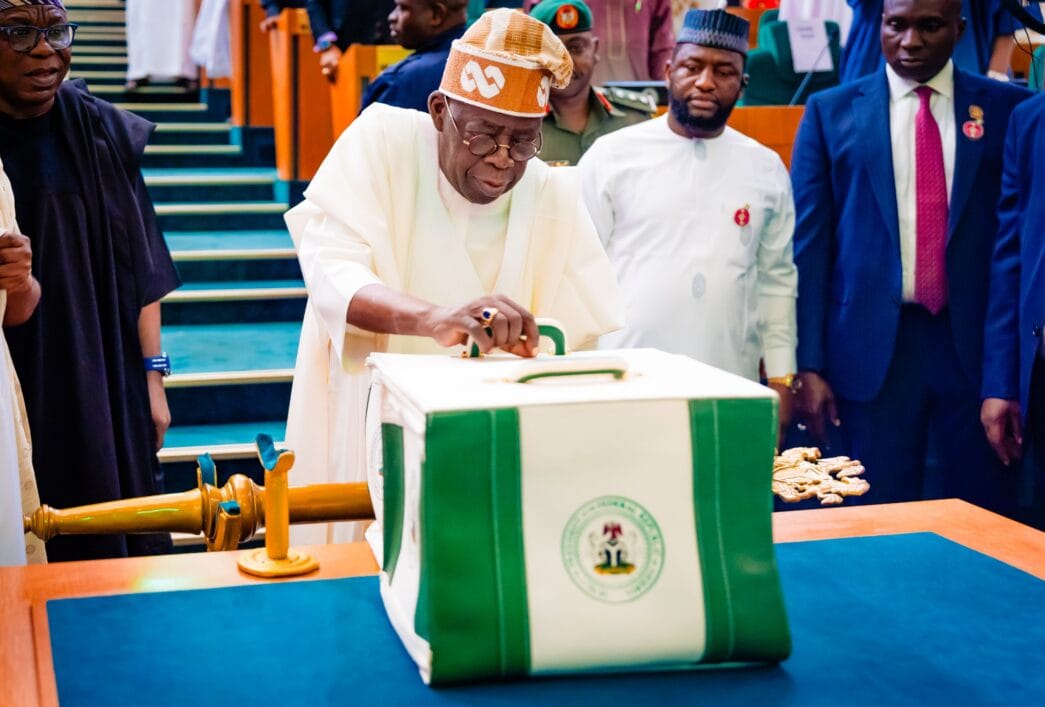
Nigeria’s President Bola Tinubu has presented a proposed national budget of ₦58.18 trillion (approximately $39 billion at current exchange rates) for 2026 to the country’s bicameral National Assembly.
The appropriation bill, titled the “Budget of Consolidation, Renewed Resilience and Shared Prosperity”, envisages total revenue of ₦34.33 trillion and a fiscal deficit of ₦23.85 trillion, or 4.28% of projected GDP.
Key economic assumptions underpinning the budget include a benchmark crude oil price of $64.85 per barrel, daily oil production of 1.84 million barrels, and an exchange rate of ₦1,400 to the US dollar.
Presenting the bill on December 19, President Tinubu pointed to improving macroeconomic indicators, including third-quarter 2025 GDP growth of 3.98%, inflation falling to 14.45% in November from earlier highs above 24%, and foreign exchange reserves rising to around $47 billion, sufficient for more than 10 months of import cover.
The budget allocates ₦5.41 trillion to defence and security, the largest single envelope, reflecting ongoing efforts to tackle widespread banditry, insurgency and other internal threats, analysts say.
Infrastructure is allocated ₦3.56 trillion, education ₦3.52 trillion and health ₦2.48 trillion. Capital spending totals ₦26.08 trillion, with recurrent (non-debt) expenditure at ₦15.25 trillion and statutory debt servicing at ₦15.52 trillion.
President Tinubu said the government would enforce greater fiscal discipline in 2026, including clearing outstanding capital liabilities from previous years by March and ending the practice of concurrent budget implementation cycles. He also emphasised measures to boost non-oil revenues through digital reforms and improved performance of state-owned enterprises.
The main opposition Peoples Democratic Party (PDP) strongly criticised the proposals, describing them as likely to prolong economic hardship for most Nigerians. In an official statement, PDP National Publicity Secretary, Ini Ememobong, argued that reported growth has failed to improve living standards, citing World Bank figures showing that more than 30.9% of the population live below the international extreme poverty line.
The PDP contrasted the current 3.98% growth rate with higher rates achieved in earlier years under previous administrations and warned that increased security spending would achieve little without transparent procurement, better equipment and improved welfare for armed forces personnel. It also condemned the continued overlap of multiple budget cycles as damaging to fiscal accountability.
Independent analysts have highlighted risks, which include heavy debt-servicing obligations that now absorb a significant share of revenues, persistent shortfalls in actual collections compared with targets, and a sharp fall in foreign direct investment this year amidst policy uncertainty.
The National Assembly is expected to review and debate the bill in the coming weeks before final passage. Implementation will depend heavily on oil market performance and domestic revenue mobilisation. It will also depend on effective management of new borrowing in Africa’s most populous country and largest economy.