



Niamey, Niger
Investigators in Niger have shed new light on a brazen jihadist assault on the country’s main airport last month, revealing how attackers slipped into the capital using a vehicle seized in an earlier raid.
The assault on 29 January targeted Air Base 101 and Diori Hamani International Airport in Niamey, a facility that serves as a vital hub for military operations in the volatile Sahel region. Islamic State (IS) claimed responsibility, describing it as a major blow to Niger’s defences.
According to preliminary findings released by Nigerien authorities on 12 February, the attackers entered Niamey aboard a bus belonging to the Ministry of Mines. The vehicle had been captured by militants during a terrorist incident a week earlier near the border with Burkina Faso.
Security forces said they arrested 17 suspects of Nigerien and Burkinabé nationality, accused of direct and indirect involvement in the plot. The communiqué did not specify the fate of the attackers’ leadership, but earlier reports suggested at least one senior figure was killed during the operation.
The attack unfolded in the early hours of 29 January, with gunfire and explosions echoing across the city. Witnesses described streaks of light in the night sky, consistent with anti-aircraft fire, as militants reportedly used small arms, explosives and drones to target hangars and aircraft.
IS propaganda claimed the raid destroyed or damaged six military drones, a Nigerien air force plane and three civilian aircraft, including two operated by ASKY Airlines and one by Air Côte d’Ivoire. Niger’s defence ministry reported that four soldiers were wounded and 20 attackers killed, insisting the assault was repelled swiftly.
The incident marked one of the closest jihadist strikes to Niamey in years, exposing vulnerabilities in a capital long considered relatively insulated from the insurgencies ravaging the wider Sahel.
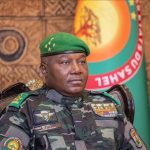
Niger, like its neighbours, Mali and Burkina Faso, has faced a surge in violence from groups linked to IS and al-Qaeda since the early 2010s. But the coup that brought General Abdourahamane Tiani to power in 2023 shifted the country’s alliances dramatically.
In the immediate aftermath of the airport attack, Tiani publicly accused France, Benin and Cote d’Ivoire of backing the militants, without providing evidence. He thanked “Russian partners” for their role in foiling the plot.
The latest investigation findings, however, point to a more regional dimension. The use of a bus seized near the Burkina Faso border and the arrest of Burkinabé nationals suggest cross-border networks, possibly involving militants operating from sanctuaries in the porous frontier zones.
Analysts say the raid reflects a change in tactics by IS affiliates in the Sahel. The group, known locally as Islamic State Sahel Province, has increasingly targeted high-profile urban sites to undermine the credibility of military juntas in the region.
“These attacks are designed to show that even the capitals are not safe,” said a regional security expert who asked not to be named due to the sensitivity of the topic. “It’s propaganda as much as strategy.”
The assault also disrupted civilian air travel. The airport, which handles domestic and international flights, was temporarily closed, keeping passengers stranded and affecting regional connectivity. Damage to civilian planes has raised concerns about the economic ripple effects in a country already grappling with sanctions from the Economic Community of West African States (ECOWAS) following the coup.
Niger’s military government has since reinforced security in Niamey, with checkpoints and patrols visible across the city. But the attack has fuelled debate about the effectiveness of the junta’s security strategy. Supporters of Gen Tiani argue that the rapid response and arrests demonstrate resilience, strengthened by new partnerships. The position of critics, including some opposition figures in exile, appear to focus on claims that the shiftt away from Western allies has left gaps in intelligence and equipment.
The Sahel’s three military-led states, Niger, Mali and Burkina Faso’s Alliance of Sahel States (AES), a loose confederation aimed at mutual defence against jihadists, has been battling violence that has continued to spread, with thousands killed and millions displaced across the region in recent years.
For ordinary Nigeriens, the attack has brought a sense of unease. “We thought Niamey was protected,” said a market trader in the capital who declined to give his name. “Now we see that nowhere is truly safe.”
Investigations are ongoing, and authorities say they are probing wider networks that may have facilitated the operation. The communiqué emphasised that more details are expected in due course.
The episode underscores the persistent challenge facing the Sahel: jihadist groups adapting to political upheaval, while governments struggle to balance sovereignty with the need for effective security.
In a region where coups have become almost routine, the airport raid serves as a stark reminder that the fight against extremism remains far from won.


